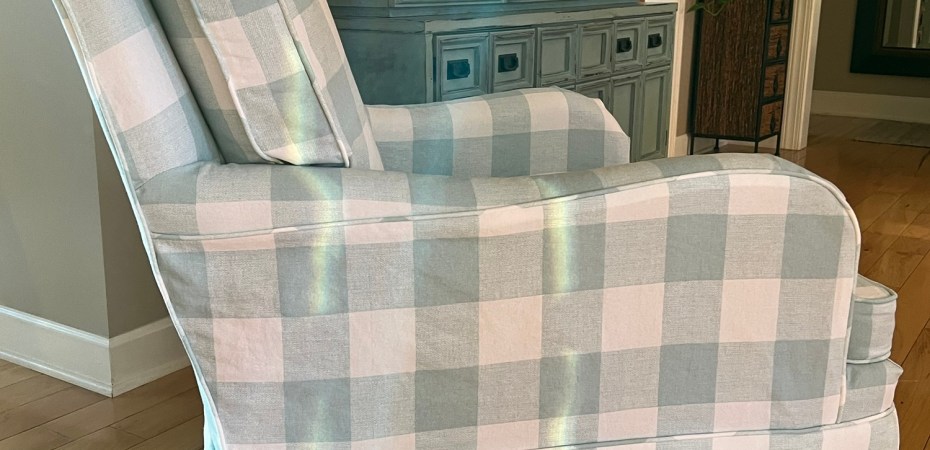
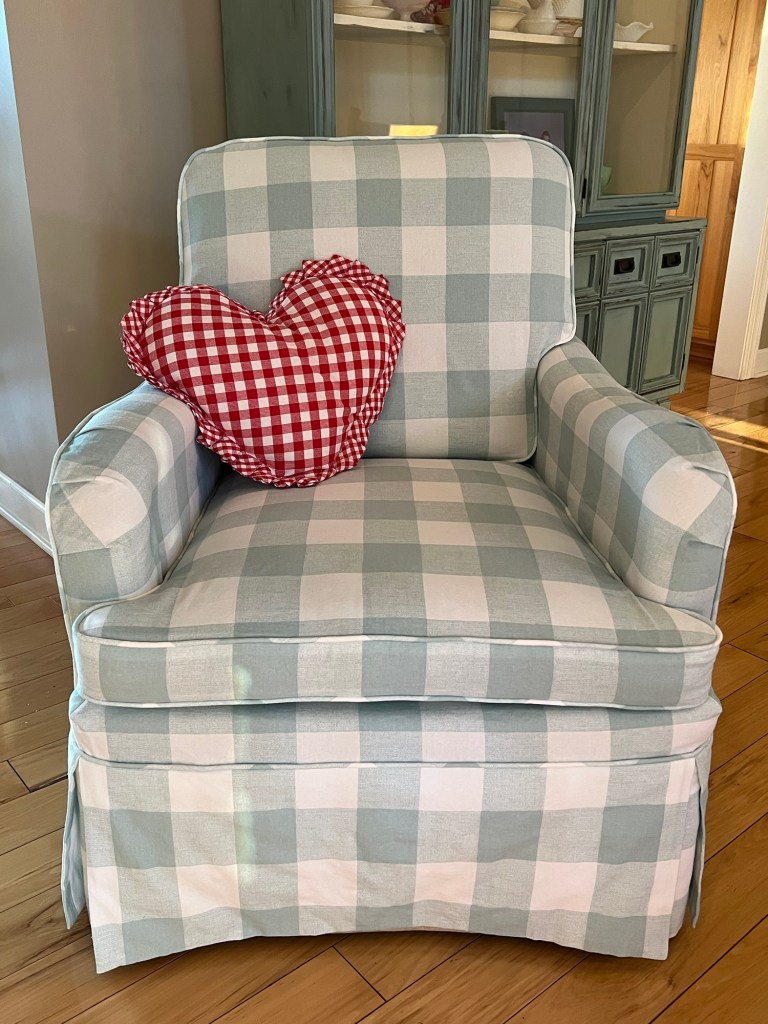
When I was asked to make a couple of slipcovers for this chair I thought it would be an easy job. After all I was basically duplicating the existing slipcover in a fabric that nearly identical to the existing slipcover. It was a sentimental chair and the owners did not want to remove skirts or covers on the seat or back cushions. How hard could that be?
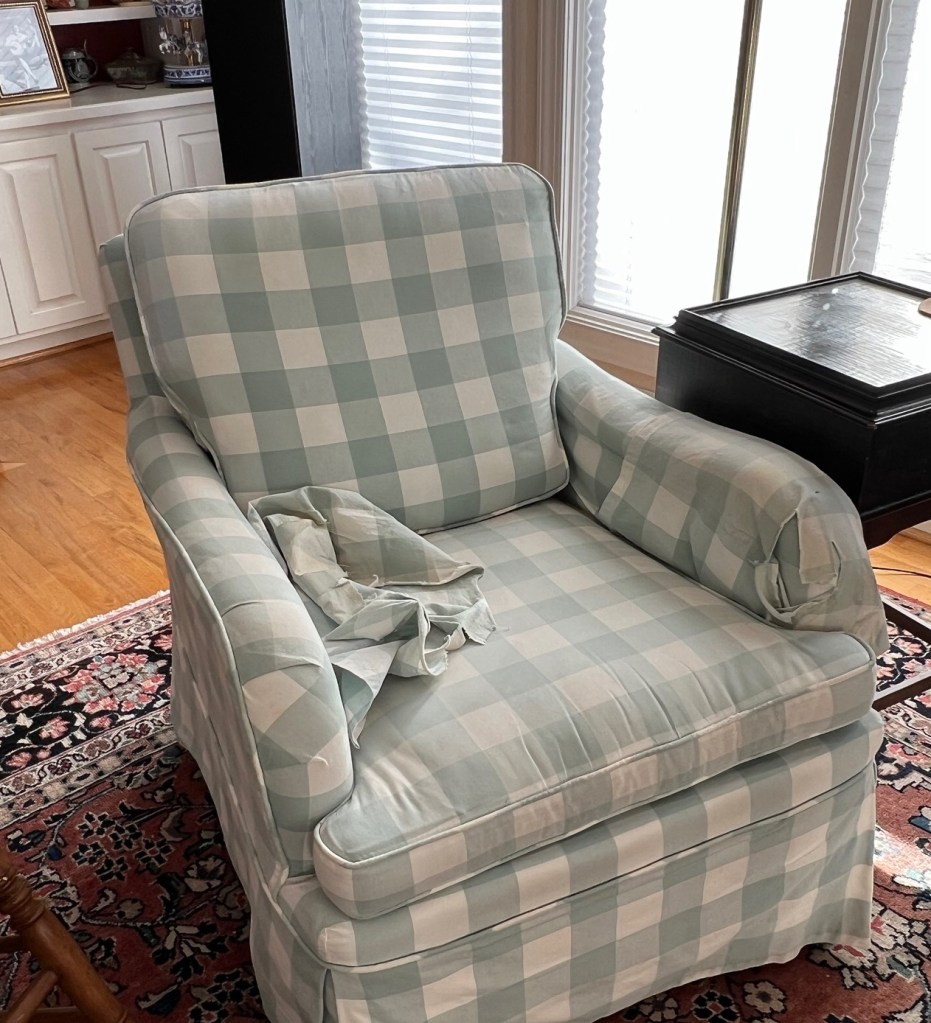
Well as it turns out it was very challenging. I had planned plenty of fabric to account for fabric shrinkage, pattern matching, cording and a generous layout of the pieces. It was just something that would take time and patience.
My client pre washed the fabric per my instructions and the fabric shrunk quite a bit, about twelve inches for each five yard cut. I slowly and carefully set out to cut the fabric piece by piece as I needed them (in duplicate for the second slipcover) being extra careful to match up the checks both vertically and horizontally on all the areas that it would matter. I would need to match up the front to the back, the outer arms to the inner arms and with each side, the front decking to the front and the seat and back cushions to each other was well as to the chair. Whew! I definitely had to be on my game and paying attention!
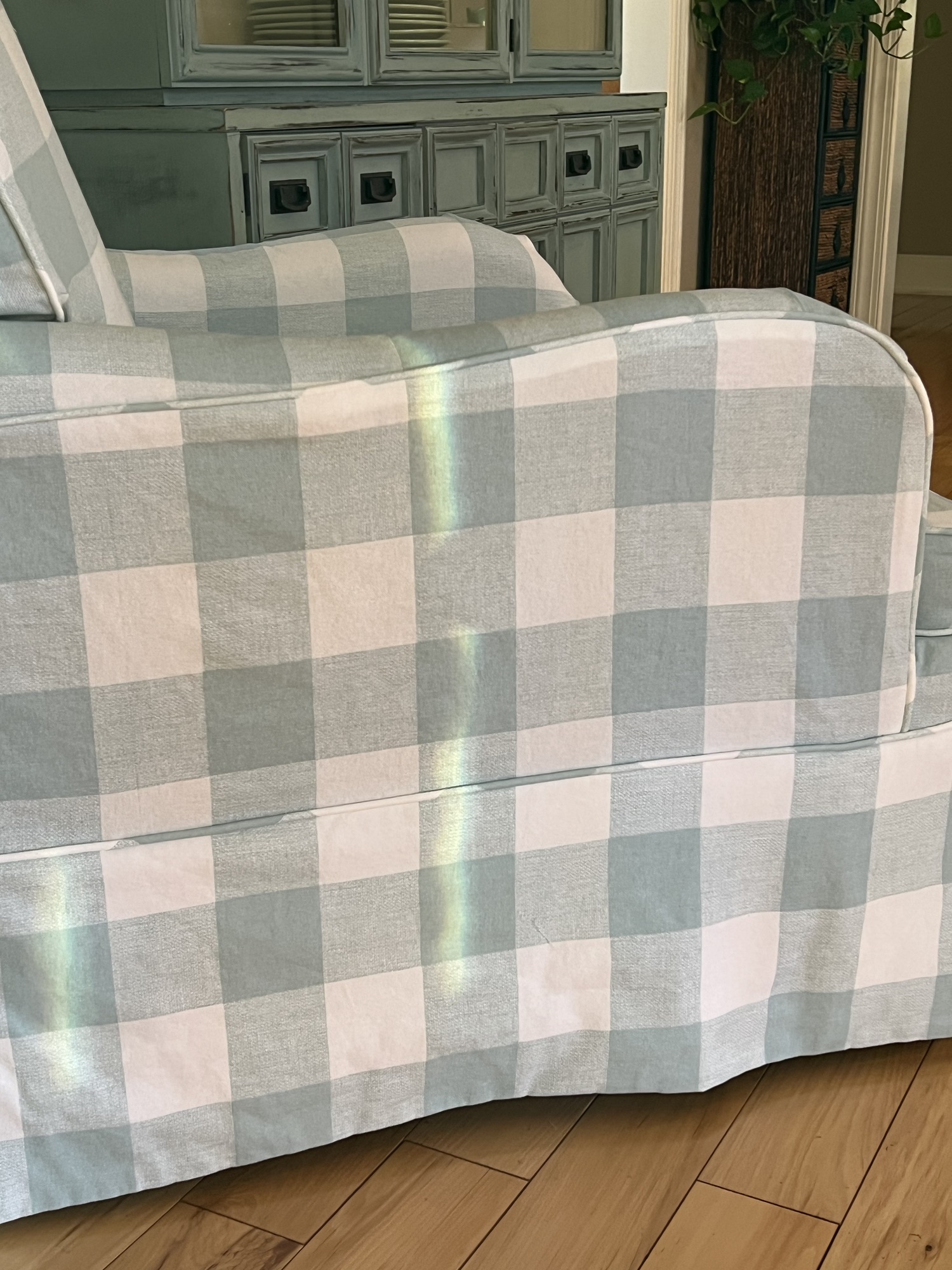
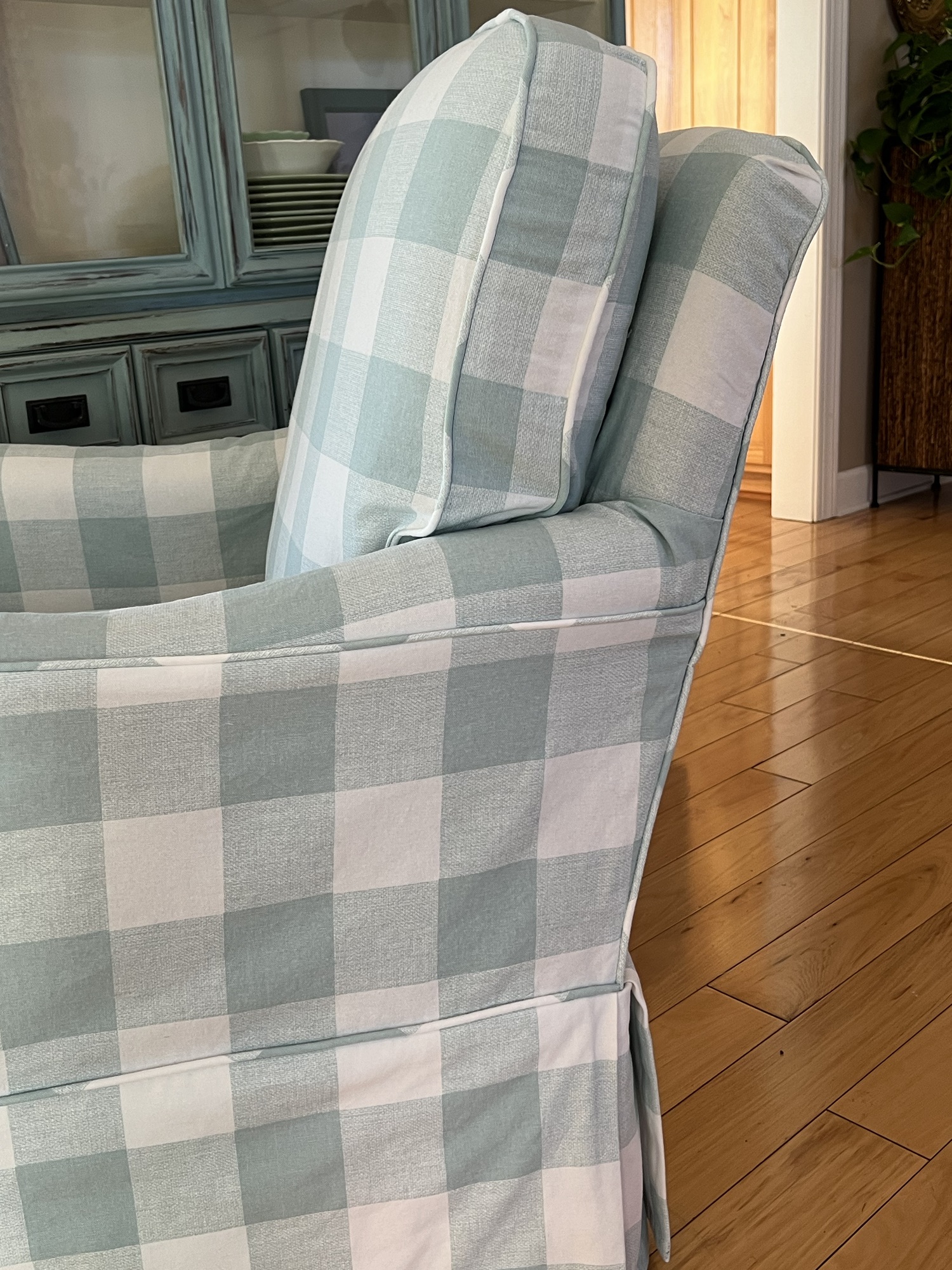
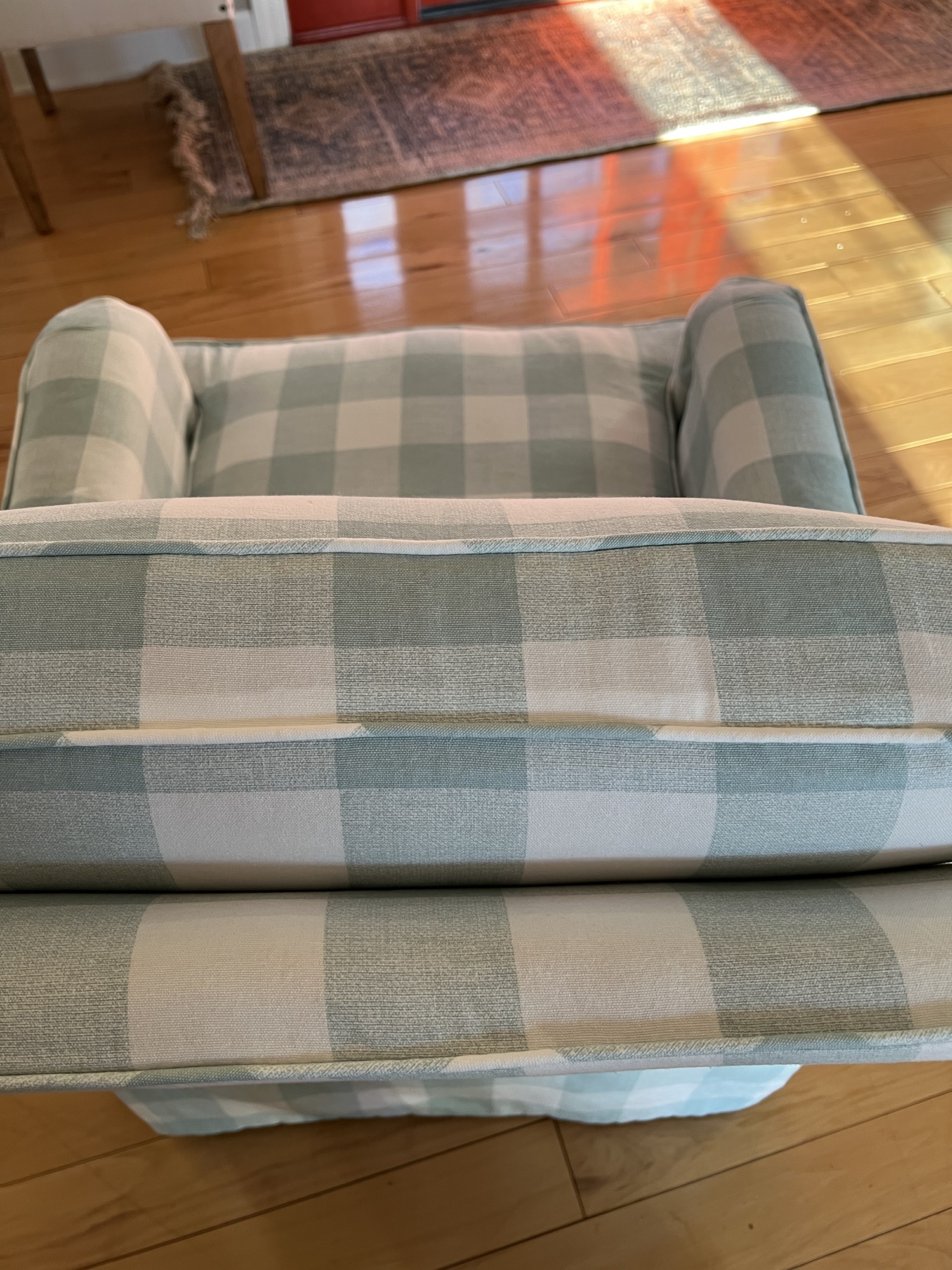
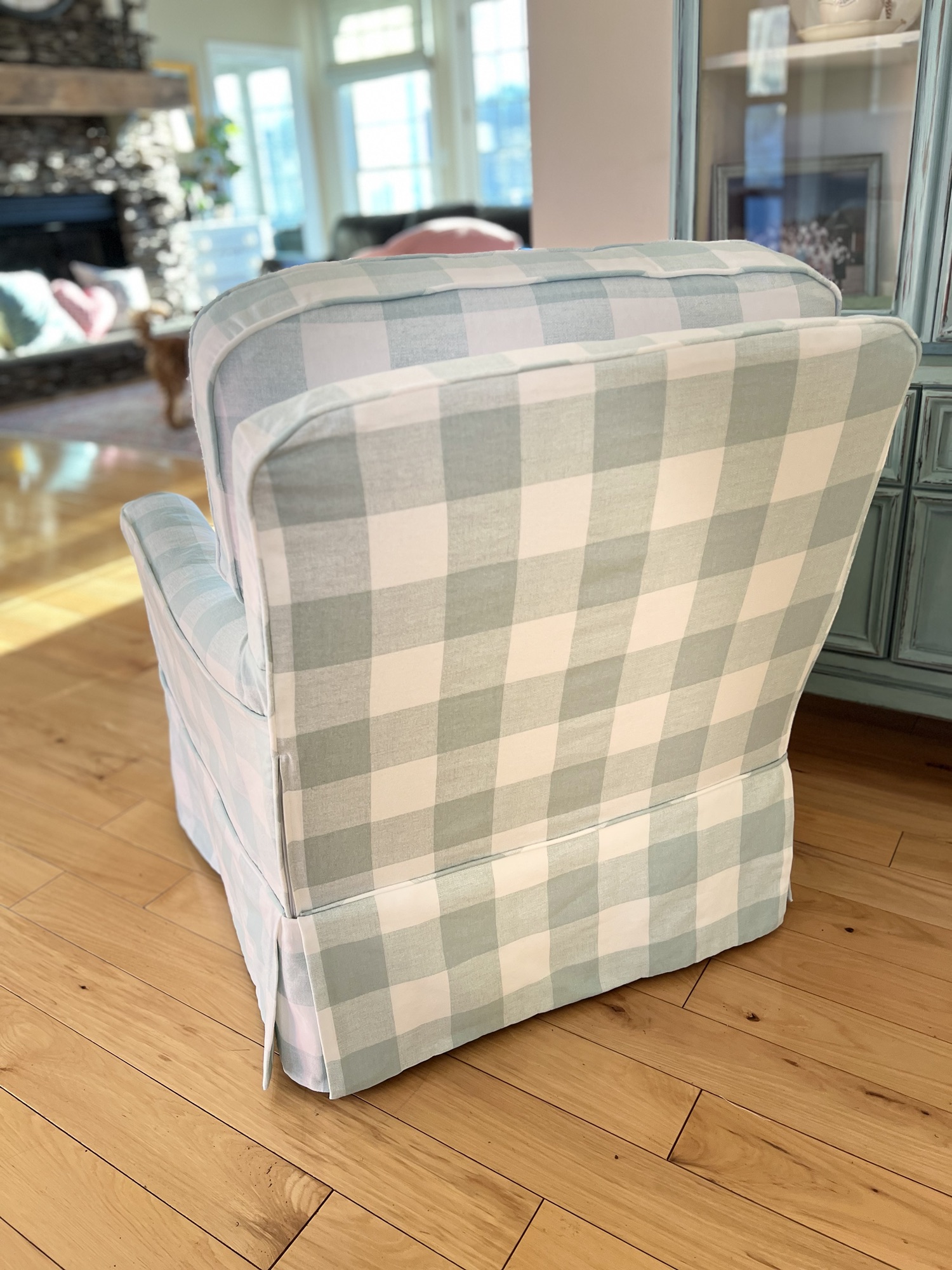
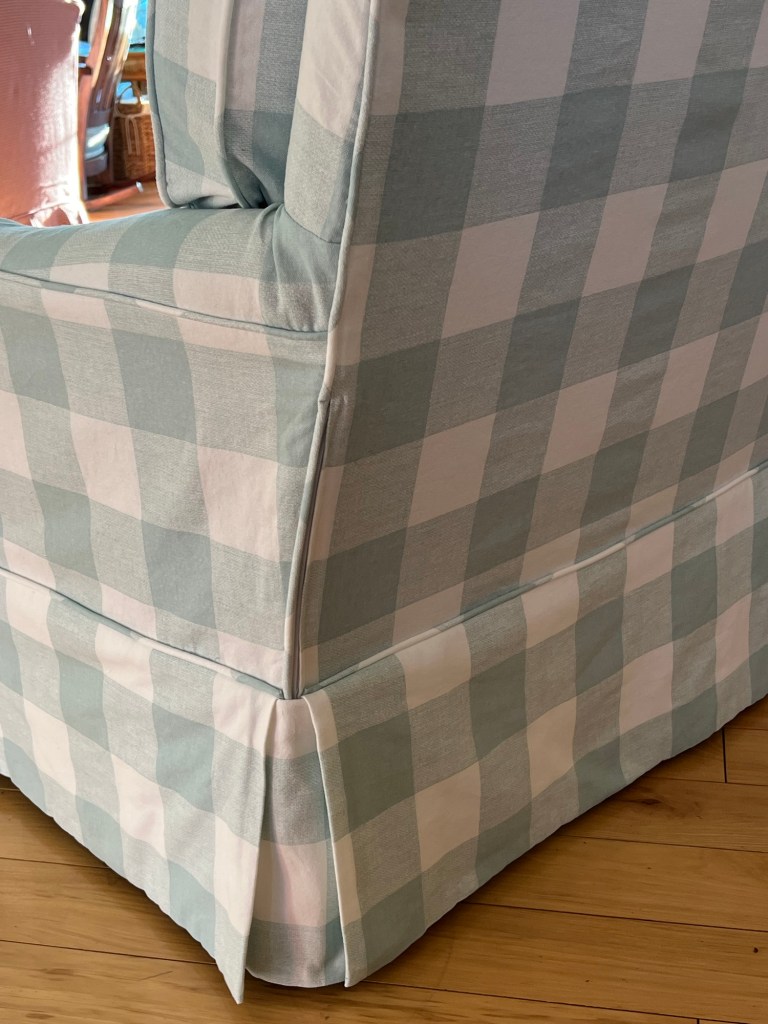
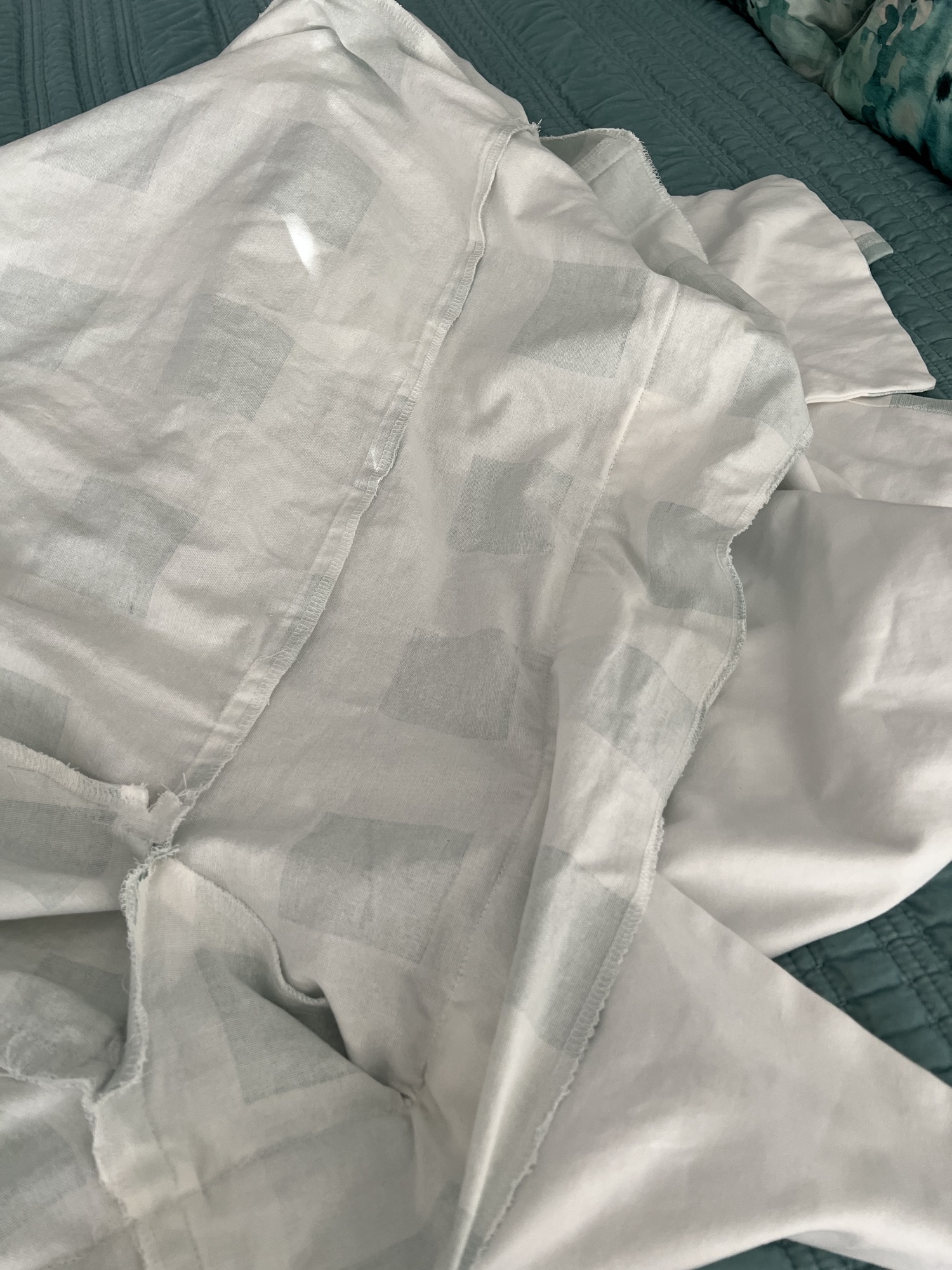
I had originally planned to do a self-lined skirt, which of course also had to be matched up with each side and all the way around. After doing some calculating I realized this wouldn’t be possible. I decided, instead, to line the skirt with a white napped satin lining. I preshrunk it so it would wash the same as the face fabric when constructed.
Instead of a continuous skirt all the way around I made four separate panels for the sides. A separate gusset panel would go in each corner after the main skirt panels were sewn on. I love this method of doing skirts as it is easier to handle so much fabric, to match up the plaids and make adjustments.
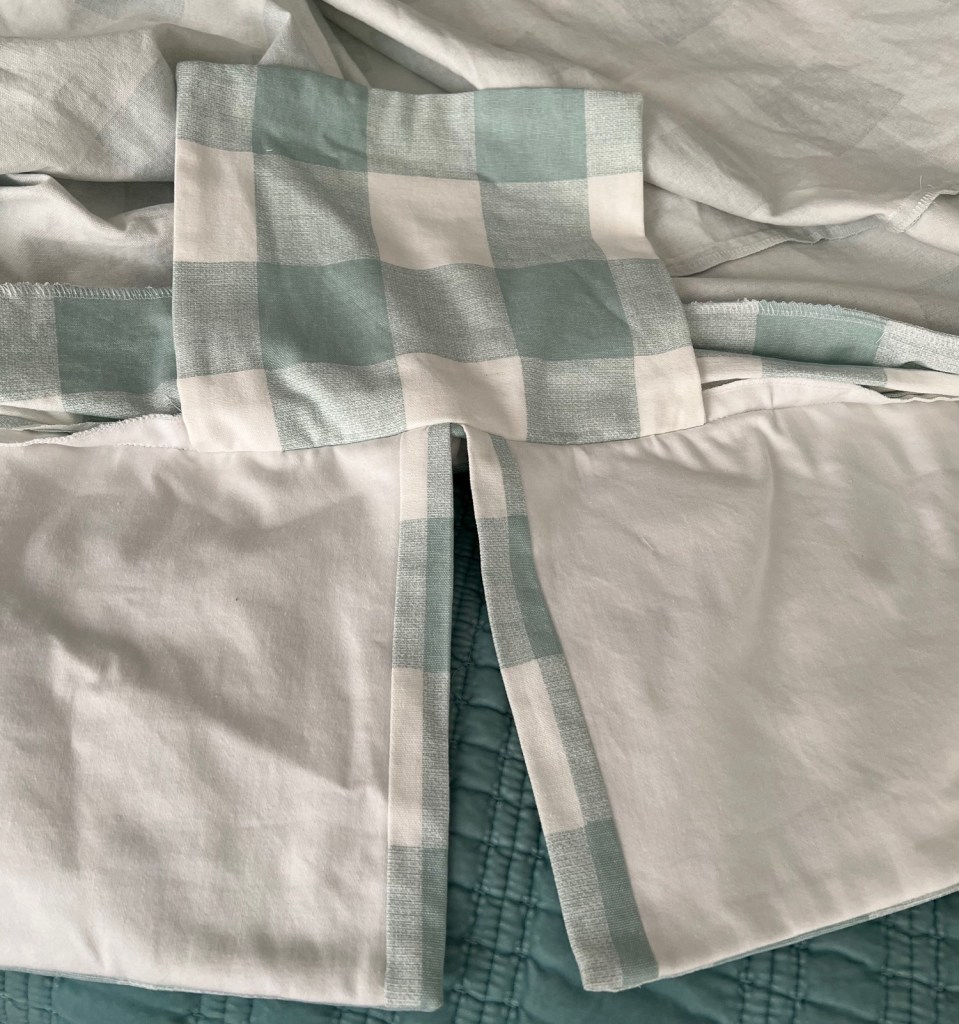
Instead of a Velcro closure on the left side like the original, I installed a zipper next to the cording. The back gusset folded over the zipper closure to Velcro over to the back skirt to completely conceal the zipper and allow for a skirted back left corner as well. The original did not have a skirt on the left side and this just looked odd to me.
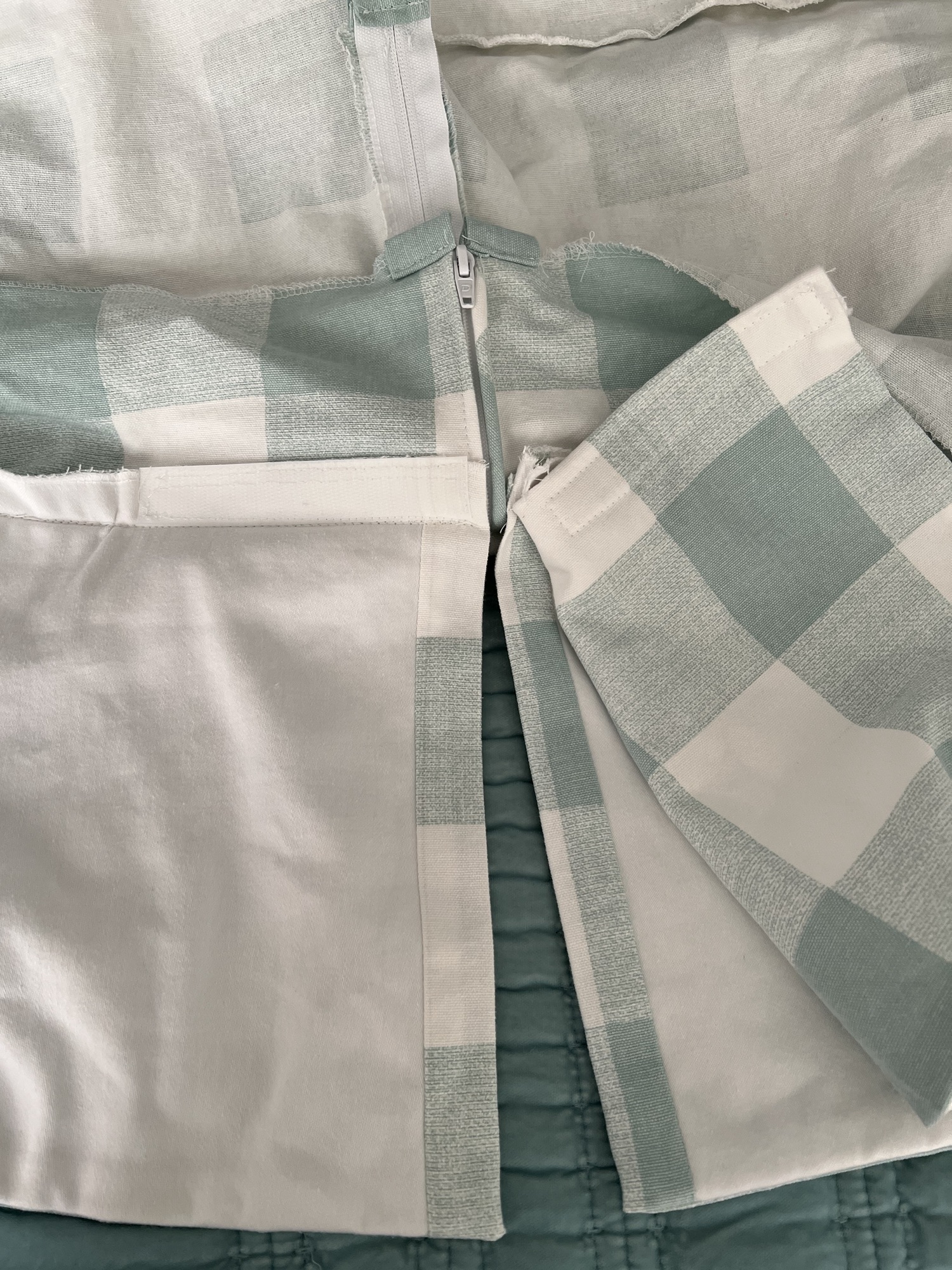
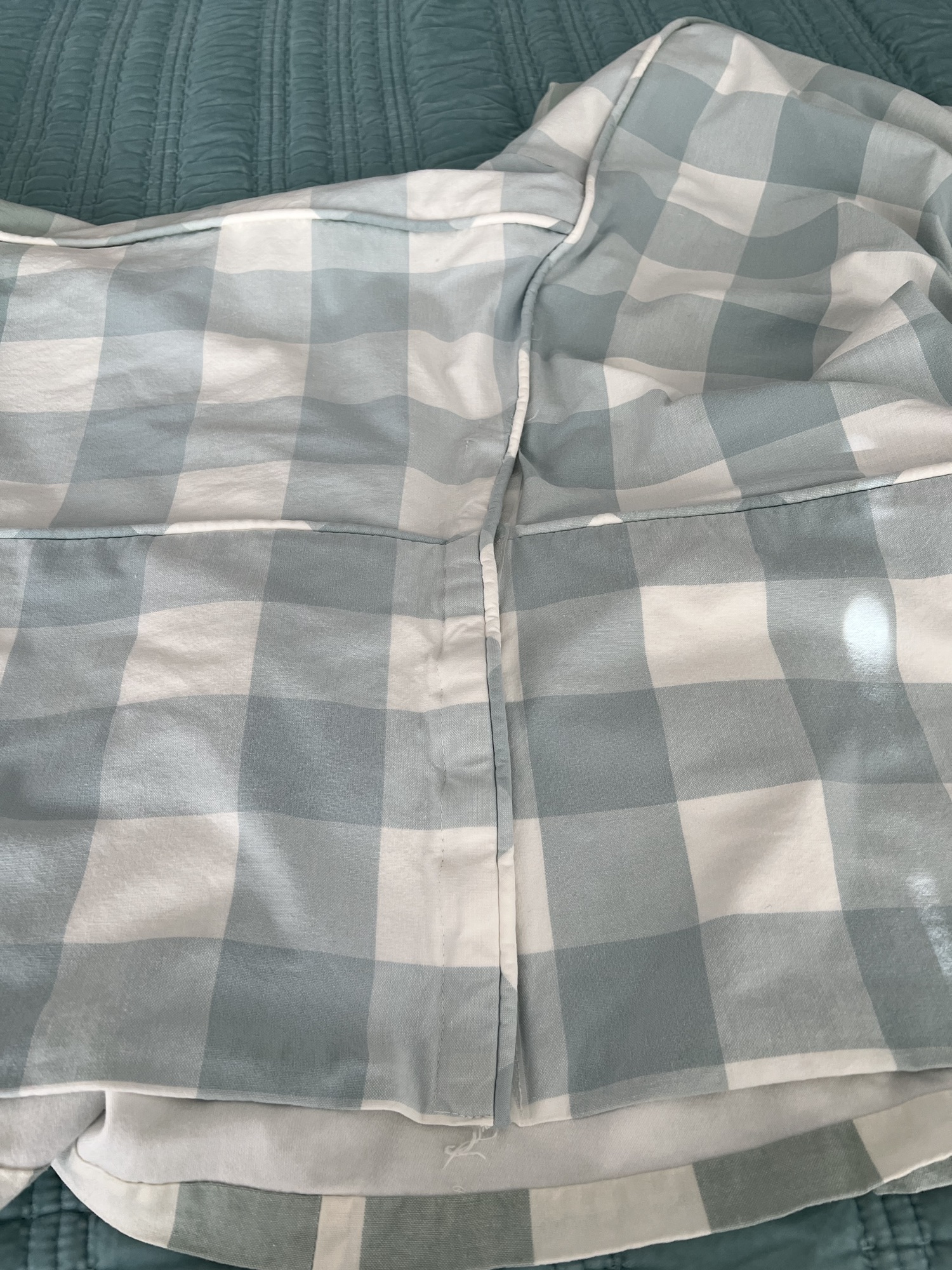
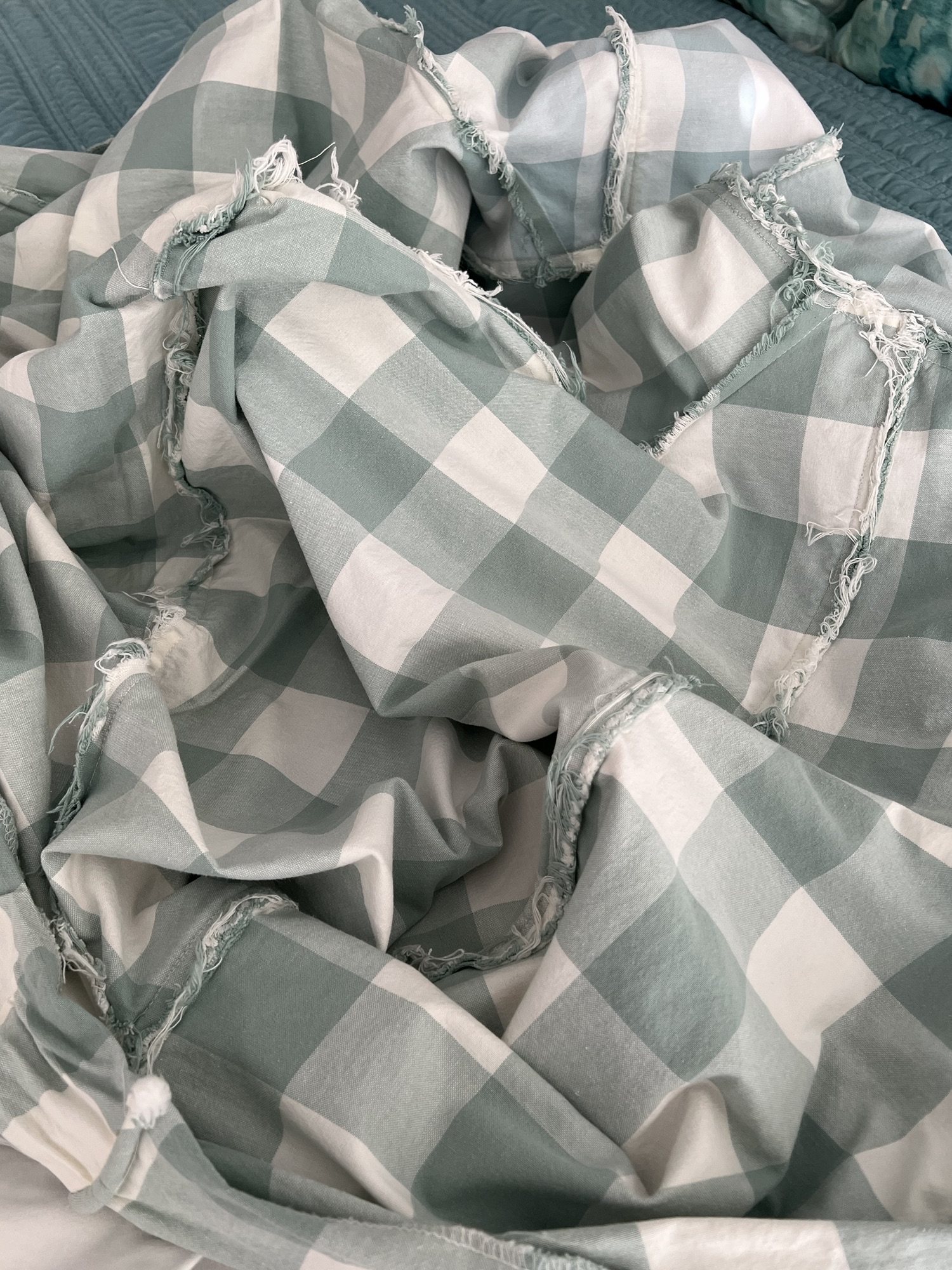
One thing that I always do with my slipcovers is to trim and serge all my seams. Un-serged seams, like on the original slipcover, can fray when a slipcover gets washed often. I could also tell the original was not pre washed as the slipcover had shrunk quite a bit.
I used the scraps and the last half yard of fabric to make two sets of arm covers for the two sets of slipcovers. In the end I used every bit of the yardage. That was too close for my comfort.
A fresh couple of new slipcovers for this sentimental chair.


Denise
 detailsbydenise.com